

Stellate Ganglion Block for PTSD Specialist
BioHealth Pain Management Specialists
A stellate ganglion block, or SGB, is an image-guided injection that may help reduce certain symptoms associated with post-traumatic stress disorder. BioHealth Pain Management provides personalized evaluations to determine whether this emerging treatment may be appropriate.
What Is a Stellate Ganglion Block?
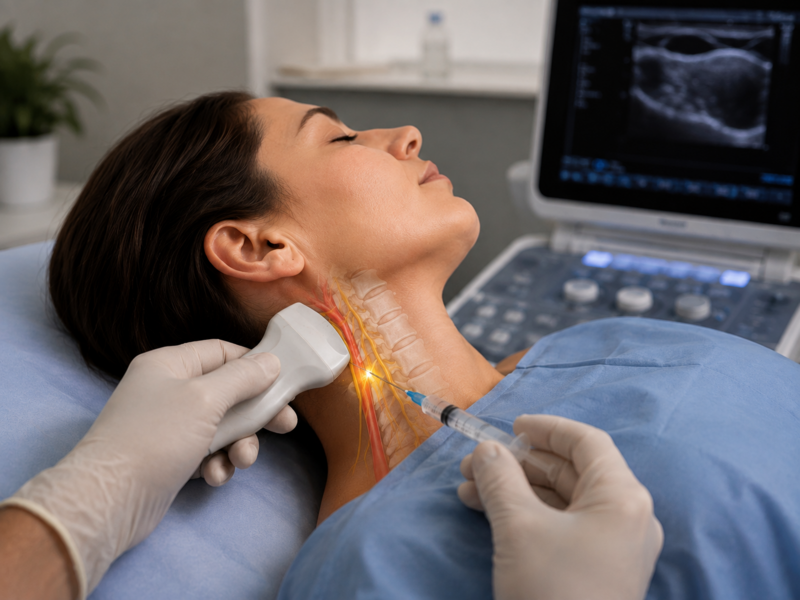
The stellate ganglion is a group of sympathetic nerves located near the front of the neck. During an SGB procedure, local anesthetic is carefully injected near these nerves to temporarily reduce sympathetic nervous system activity.
For some patients with PTSD, this may help decrease symptoms associated with an overactive fight-or-flight response, including:
- Feeling constantly alert or on edge
- Anxiety and physical tension
- Irritability
- Difficulty sleeping
- Increased reactions to stress or reminders of trauma
Potential Benefits of SGB for PTSD
Some studies suggest that SGB may provide short-term improvement in certain PTSD symptoms. Results vary, and SGB is considered an adjunctive treatment rather than an established first-line therapy or cure for PTSD.
To learn whether a stellate ganglion block may be appropriate for you, call BioHealth Pain Management at 424-360-0066.
What to Expect During the Procedure
The patient lies comfortably while the neck is cleaned and numbed. Using ultrasound or another imaging method, the physician guides a small needle near the stellate ganglion and delivers local anesthetic. Patients are monitored after the procedure and generally return home the same day.
Frequently Asked Questions
SGB has been used for decades to treat certain pain conditions. Its use for PTSD is considered off-label, and research into its effectiveness is continuing.
No. SGB should not replace evidence-based PTSD care. It may be considered alongside psychotherapy, medication, or other treatments recommended by a qualified mental health professional.
Some patients report changes within hours or days, while others experience limited or no improvement. Individual results cannot be guaranteed.
The duration varies. Some patients experience improvement for several weeks or longer, and additional treatment may be considered after evaluation.
Temporary effects may include a drooping eyelid, red eye, warmth in the face, hoarseness, difficulty swallowing, or soreness near the injection site. Less common risks will be reviewed before treatment.