

Vertebral Augmentation
BioHealth Pain Management Specialists
Vertebral augmentation is a minimally invasive treatment used to stabilize painful compression fractures in the spine. These fractures are commonly associated with osteoporosis, trauma, or weakened vertebrae.
What Is Vertebral Augmentation?
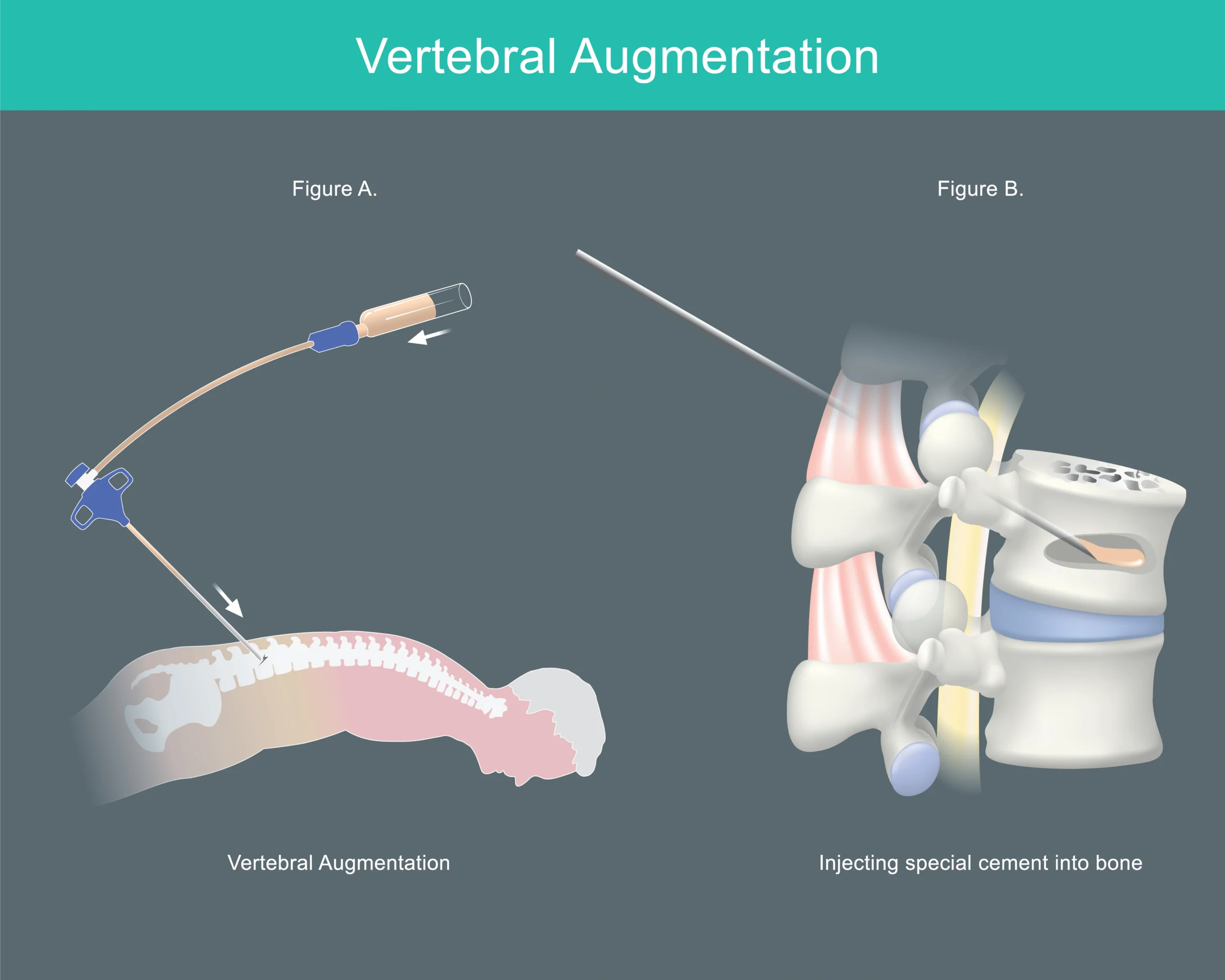
Vertebral augmentation includes procedures such as vertebroplasty and kyphoplasty. Using imaging guidance, the physician injects medical-grade bone cement into the fractured vertebra to stabilize it.
Treatment may be considered when patients experience:
- Sudden or persistent back pain
- Pain that worsens with movement or standing
- Reduced mobility
- Loss of height or a hunched posture
- Limited relief from conservative treatments
Benefits of Vertebral Augmentation
Potential benefits include reduced pain, improved mobility, greater spinal stability, and a faster return to daily activities. Results vary by patient.
Find out if vertebral augmentation is right for you. Call BioHealth Pain Management at 424-360-0066.
What to Expect
The physician guides a specialized needle into the fractured vertebra through a small incision. Bone cement is then carefully injected to stabilize the fracture. Most patients are monitored briefly and return home the same day.
Frequently Asked Questions
It may be appropriate for patients with a painful vertebral compression fracture confirmed through imaging, particularly when conservative treatments have not provided enough relief.
Vertebroplasty injects bone cement directly into the fractured vertebra. Kyphoplasty first uses a small balloon to create space before the cement is placed.
Some patients experience relief within a few days, although results and recovery times vary.
No. It stabilizes an existing compression fracture but does not treat the underlying bone loss. Osteoporosis may require separate treatment.
Possible risks include bleeding, infection, cement leakage, increased pain, or nerve complications. Your physician will review the potential risks and benefits with you.